Herons and Wallpaper: Walthamstow Wetlands to Walthamstow Village
A morning loop around the Victorian reservoirs of Walthamstow Wetlands, with coffee in the old pumping station. Then the 123 bus to William Morris's boyhood home, a walk to the medieval parish church where he was baptised, and lunch at the Queens Arms in Walthamstow Village.
Walthamstow wears its history lightly. The reservoirs on its western edge were dug by Victorian navvies to give London clean drinking water, and are now one of the city's great nature reserves. A couple of miles east, the boy who grew up to be William Morris spent his teenage years in a Georgian house by a moat, and was baptised in the old village church.
This half-day links them up: a wild morning by the water, a short bus ride, then Morris, a medieval church and a proper village pub.
- Go on a Saturday if you can. The William Morris Gallery is closed on Mondays. The Queens Arms serves lunch from Friday to Sunday; on other days its kitchen may only open in the evening, so check before you go. St Mary's café and exhibition space are open on weekdays and Saturdays but not on Sundays.
- Start early. The Wetlands open at 9.30am and close at 4pm from October to March (5pm from April to September). The Engine House café closes half an hour before the site.
- Everything is free apart from lunch, coffee and the bus fare (contactless or Oyster).
- Wear sensible shoes. The main path is concrete, but the rest of the Wetlands trails are dirt and can be muddy after rain.
- Dogs aren't allowed at the Wetlands, apart from assistance dogs.
-
Underground station
Tottenham Hale station
Ferry Lane, London N17 9NA
Served by the Victoria line and by trains from Liverpool Street and Stansted. Our Down the Lea walk starts here too.
Leave the station and turn left along Ferry Lane, heading east. Cross the River Lea and continue past the Ferry Boat Inn, a Grade II listed pub that remembers the ferry across the Lea which once ran here. The main entrance to the Wetlands is on your right just beyond it, about ten to fifteen minutes from the station.
-
Café
The Engine House, Walthamstow Wetlands ↗
2 Forest Road, London N17 9NH
Walthamstow Wetlands is a 211-hectare nature reserve made up of ten reservoirs. The East London Waterworks Company dug them on marshland beside the River Lea between the 1860s and 1904. The site opened to the public in 2017, managed by the London Wildlife Trust, and is a Site of Special Scientific Interest for its breeding, migrating and wintering waterbirds.
The handsome brick building at its heart is the Marine Engine House. It was built in 1894 as the Ferry Lane Pumping Station and housed the steam engines that pumped water through the reservoirs. It stayed in use until the 1980s. Its tall chimney was demolished by 1960, after the pumps switched from coal to electricity. Look up for the new swift tower, added in the conversion to give nesting swifts a home.
Pick up a trail map in the visitor centre. Climb to the first floor for a view across the water before you set off.
-
Park or garden
The Wetlands loop
Walthamstow Wetlands, London N17 9NH
Follow the waymarked paths south between the reservoirs. The main loop is roughly 3½ miles (5.5 km) and completely flat. Allow an hour and a half if you stop to watch the birds, and pick a shorter loop from the map if you're pushed for time.
What to look out for:
- The heronry. Big untidy nests in the treetops on the reservoir islands belong to one of the UK's largest heron colonies, here since the 1930s. Late winter and spring are the best times to see the birds on the nests.
- Ducks in their thousands. Tufted ducks peak in late summer, and in winter look for pochard and shoveler. Cormorants hang out their wings to dry on the islands, and with luck you'll see a kingfisher.
- The Coppermill. The Italianate tower at the southern end of the site is the Grade II listed Coppermill. It was a mill long before the reservoirs, and the waterworks company bought it in 1859 and made it into a pumping house.
Then walk back up to the Engine House for a coffee and something from the counter, on the terrace overlooking the water if the weather's kind.
-
Point of interest
123 bus from Walthamstow Wetlands / Ferry Boat Inn ↗
Ferry Lane, London N17
Walk back out to Ferry Lane. Catch the 123 towards Ilford from the Walthamstow Wetlands / Ferry Boat Inn stop on the Wetlands side of the road. Buses run every few minutes in the daytime.
The bus heads east along Forest Road past Blackhorse Road station. After about ten minutes it passes the Lloyd Park / William Morris Gallery stop. Get off at the next one, Bromley Road, then walk back a couple of minutes to the gallery gates. (Lloyd Park / William Morris Gallery is just as close if you'd rather hop off a stop early.)
-
Gallery
William Morris Gallery ↗
Lloyd Park, Forest Road, London E17 4PP
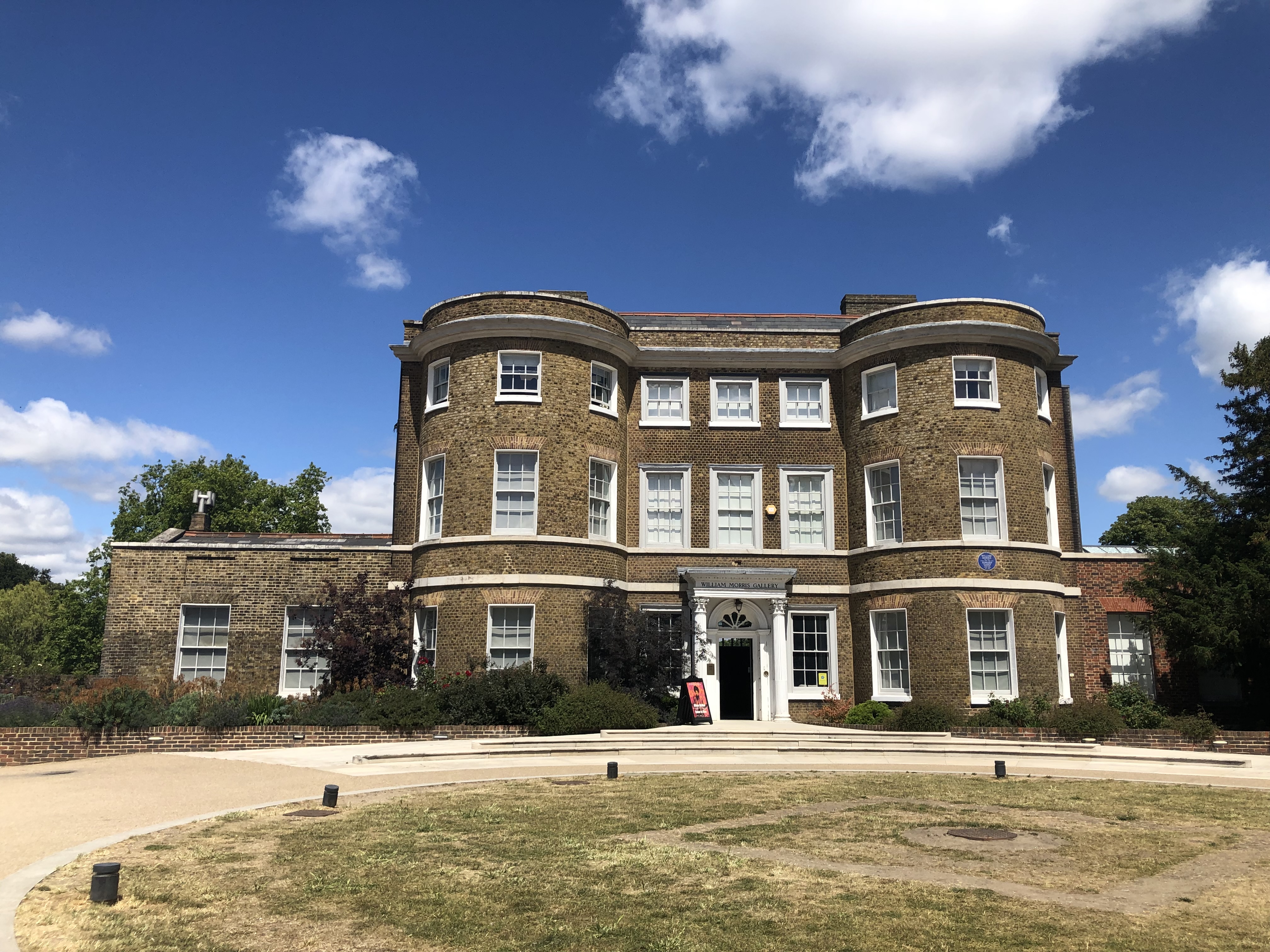
This Georgian house, known as Water House, was William Morris's family home from 1848 to 1856. His widowed mother moved here with her nine children, and Morris lived here from 14 to 22. He's thought to have written some of his earliest poems here. After the Morris family left, the publisher Edward Lloyd moved in. His family later gave the house and grounds to Walthamstow, and the grounds became Lloyd Park.
Today it's the only public gallery devoted to Morris: designer, craftsman, writer, conservationist and socialist. Inside are his wallpapers, textiles and furniture, his ideas about making beautiful things for everyone, and changing exhibitions. It was named Museum of the Year in 2013. Entry is free, and it's open Tuesday to Sunday, 10am to 5pm.
If you have time, step out into Lloyd Park behind the house. Look for the moat, which is older than the house itself.
-
Church
St Mary's Church, Walthamstow ↗
Church End, London E17 9RJ
From the gallery, walk east along Forest Road to the junction at The Bell, then south down Hoe Street. Turn left up Church Hill, and twenty minutes or so from the gallery you're in Walthamstow Village, the oldest part of Walthamstow and a conservation area.
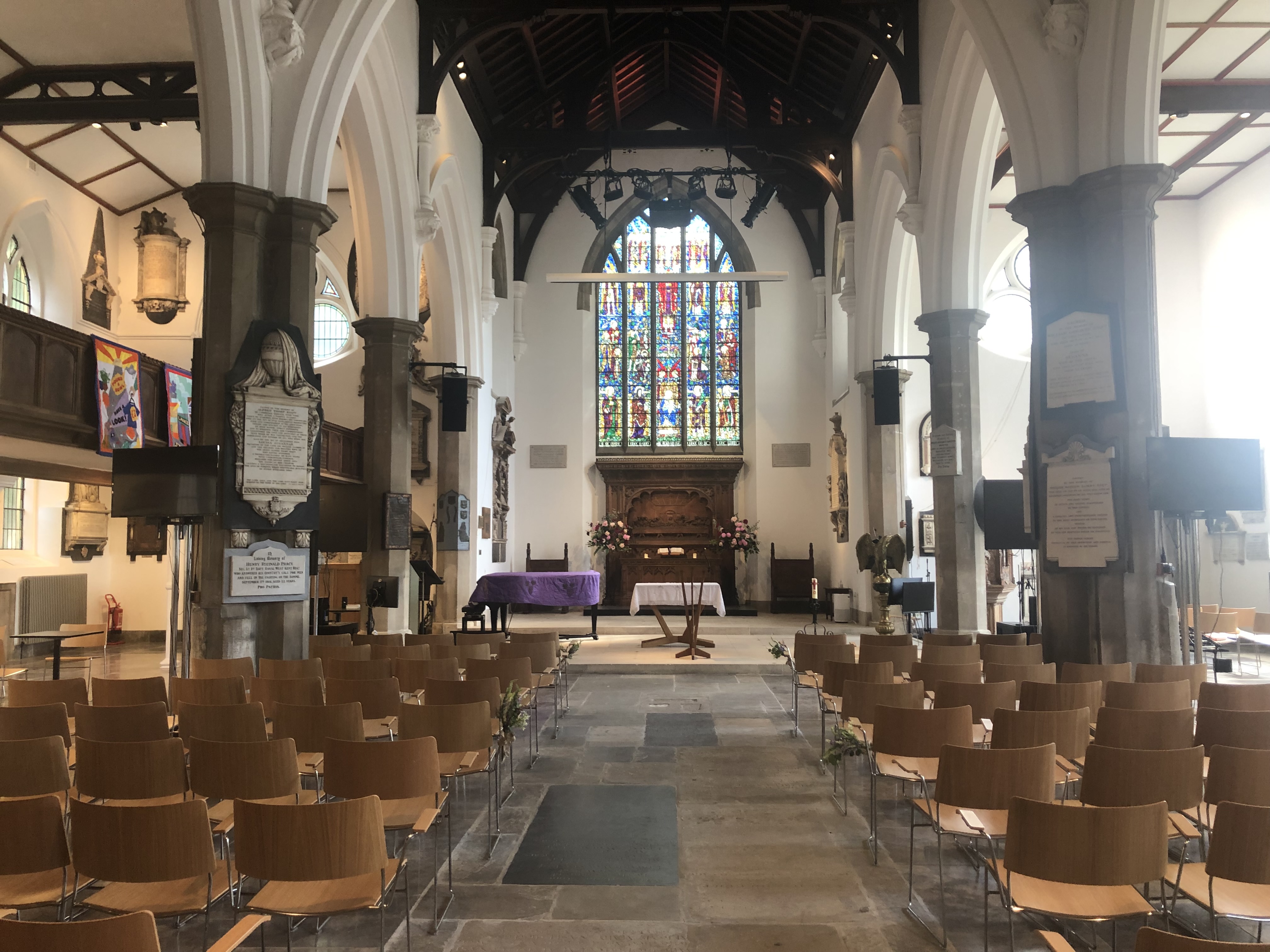
St Mary's is the ancient parish church and the oldest building in Walthamstow. It began as a Norman church around 1108, and medieval, Tudor, Georgian and Victorian features have been added since. The tower dates from the 16th century; the Tudor merchant Sir George Monoux paid for its rebuilding. Inside are more than 150 brasses and monuments, the oldest from 1436. Look for the font in which William Morris was baptised, a neat link back to the gallery.
A recent refurbishment added an extension with a café and exhibition space, open weekdays 8.30am to 4pm and Saturdays 9am to 4pm. The churchyard, with more than 1,300 monuments, serves as the village green.
Before you leave, look around Church End. Opposite the church is the timber-framed Ancient House, from the 15th century. Next to the church are the Monoux Almshouses, founded in 1527, and a few steps away is the old Vestry House.
-
Pub
Queens Arms ↗
42 Orford Road, London E17 9NJ
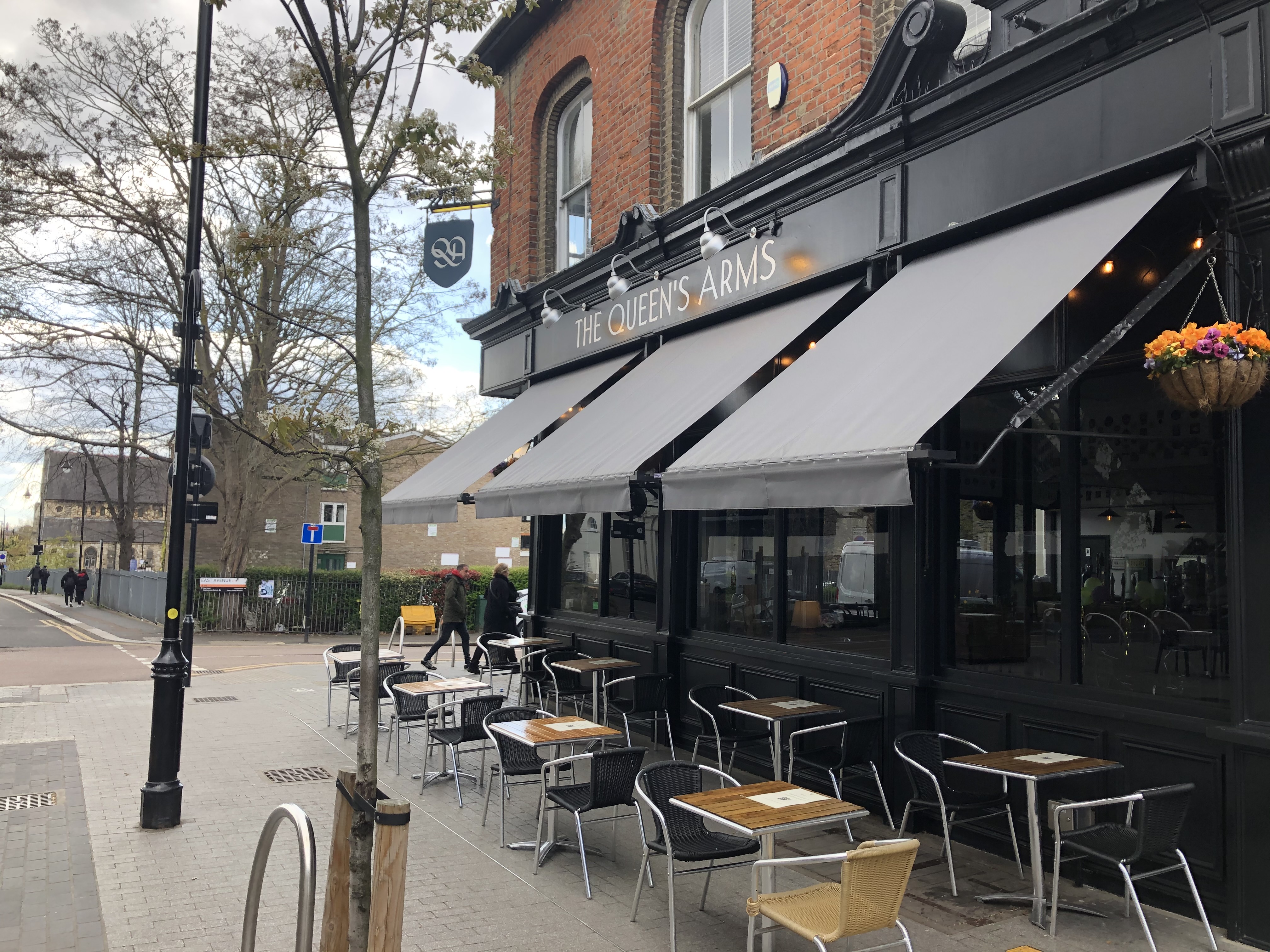
Walk down Church End into Orford Road, the village's little high street of cafés, pubs and shops. The Queens Arms is a few minutes along on the left.
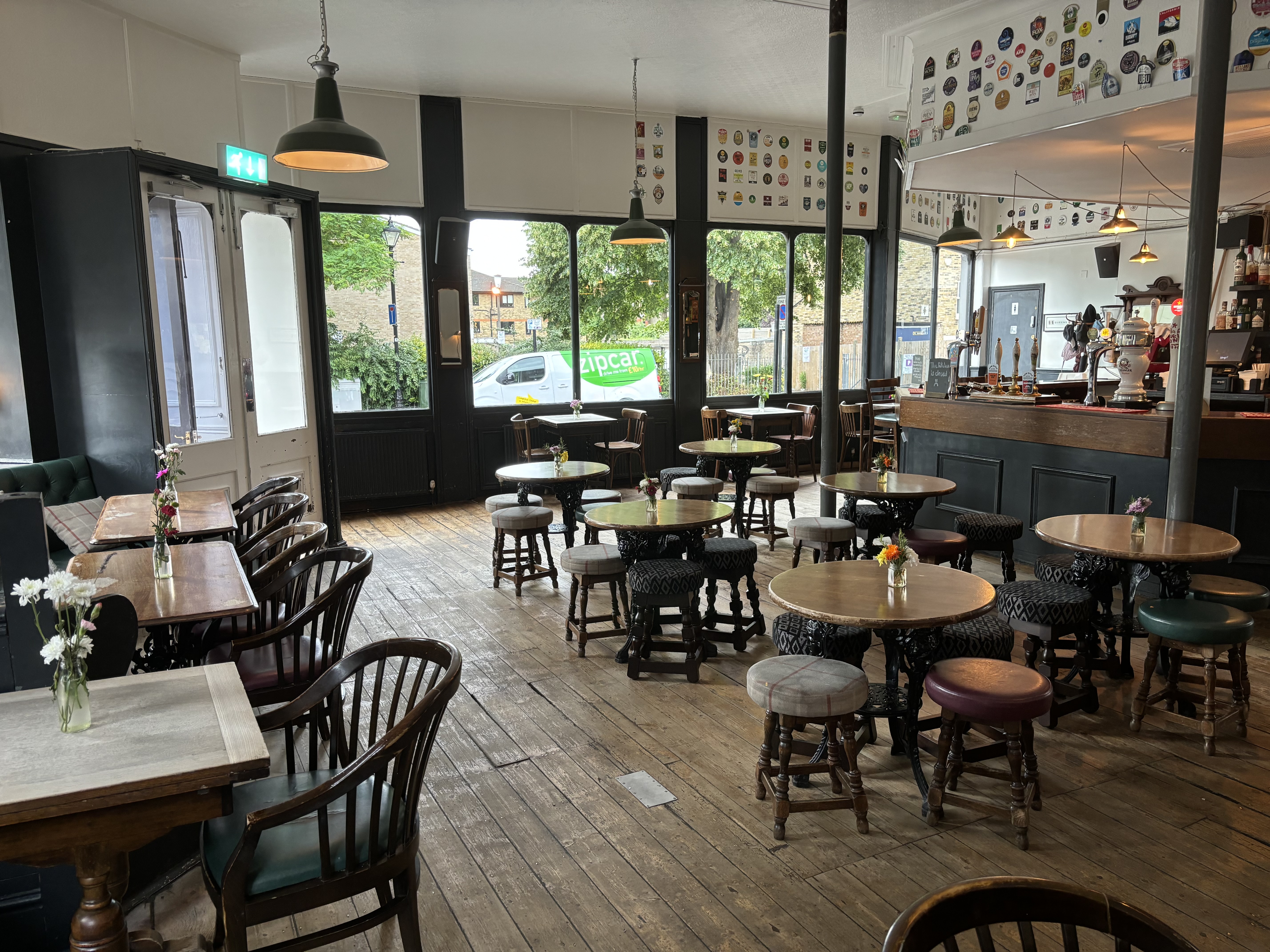
It was built in 1859, when Walthamstow was still turning from Essex village into London suburb. In recent years it has gone upmarket, with a seasonal British menu, a beer garden and a couple of changing cask ales. Weekend lunches are popular, especially the Sunday roast, so it's worth booking.
Walthamstow Central station (Victoria line and Overground) is about ten minutes' walk away when you're ready to head home.
Notes from fellow walkers (0)
No comments yet — been on this walk? Add a tip below.